
Home › Blog › Egg coffee class in Hanoi
Egg Coffee Class in Vietnam: Learn Hanoi's Icon
By the Egg Coffee Class Hanoi team · 2026-11-18
Egg Coffee Class Hanoi by Cáo Experiences teaches international travelers to make cà phê trứng—a sweetened egg-and-coffee drink invented in 1950s Hanoi. We cover the whisking technique, condensed-milk ratios, phin filter brewing, and both hot and iced versions. A class fits a morning or afternoon in your Hanoi itinerary, leaving you with hands-on skill you can repeat at home. We confirm details when you book. The experience suits coffee lovers, food travelers, and anyone curious about Hanoi's culinary history. We use fresh eggs, medium-roast Vietnamese coffee, and a metal whisk—no special equipment needed beyond what we provide. You'll learn why timing matters, what makes the foam stable, and how to troubleshoot if the egg doesn't whisk or the coffee tastes bitter.
✦ Planning this in Vietnam? Book on WhatsApp or see our Egg coffee class in Hanoi packages — reply within minutes.
What exactly is Vietnamese egg coffee, and why Hanoi?
Cà phê trứng is a sweetened, creamy coffee topped with a whipped-egg foam layer. It originated in 1950s Hanoi when milk was scarce and eggs were affordable. A barista at a Hanoi hotel invented it out of necessity, and it became a cultural icon. Today, it's served in dozens of coffee shops across the Old Quarter and beyond. The foam is silky, slightly sweet, and completely unique—no other city claims this drink. We teach the story alongside technique because the drink is Hanoi's history.

How do we teach the whisking technique in class?
We start with room-temperature egg yolks (never the white—that's the secret). You'll mix condensed milk into the yolks in a small metal bowl, then whisk by hand or with an electric mixer until the mixture is pale, thick, and mousse-like. This takes 3–5 minutes by hand and 2–3 minutes with a mixer. Timing is critical: whisk too little and the foam collapses; too long and it becomes grainy. We show you how to recognize the right texture by sight and feel, then how to layer it onto hot brewed coffee. The technique works best when the egg and milk are at room temperature and the coffee is hot (or chilled for iced versions). Many home attempts fail because people rush the whisking or use cold eggs—we drill this in class.
Hot vs. iced egg coffee: which should I learn first?
| Version | Prep time | Best for | Why it works |
|---|---|---|---|
| Hot | 8–10 min | Winter, slow mornings | Coffee heat stabilizes foam; you taste both richness and bitterness |
| Iced | 10–12 min | Summer, afternoon energy | Cold coffee beneath foam; sweeter, less bitter |
Both use identical whisking. The difference is timing: for hot egg coffee, you brew the phin filter, pour into a cup, then top with foam. For iced, you brew into a glass of ice, let it chill, then add foam on top. We teach both in class. Many students ask which to learn first—we recommend hot, because the heat helps the foam hold its shape and you can taste the coffee flavor more clearly. Iced is easier to repeat at home because you can prep the foam ahead and refrigerate it for up to 2 hours.
What about raw egg and dietary concerns?
We use fresh eggs bought daily from local markets in Hanoi. Eggs are only briefly warmed, not cooked—the heat from hot coffee alone does not pasteurize raw egg. If you're pregnant, immunocompromised, or have egg allergies, egg coffee is not safe for you. We confirm dietary needs when you book. Some travelers ask if we can use pasteurized eggs or egg substitute—we can discuss alternatives, but we cannot guarantee the texture will match authentic egg coffee. The drink's signature silky foam relies on raw egg yolk and condensed milk emulsion. If you have dairy allergies, condensed milk is non-negotiable. We'll be honest: egg coffee is not for everyone, and that's okay.
How do I repeat egg coffee at home after the class?
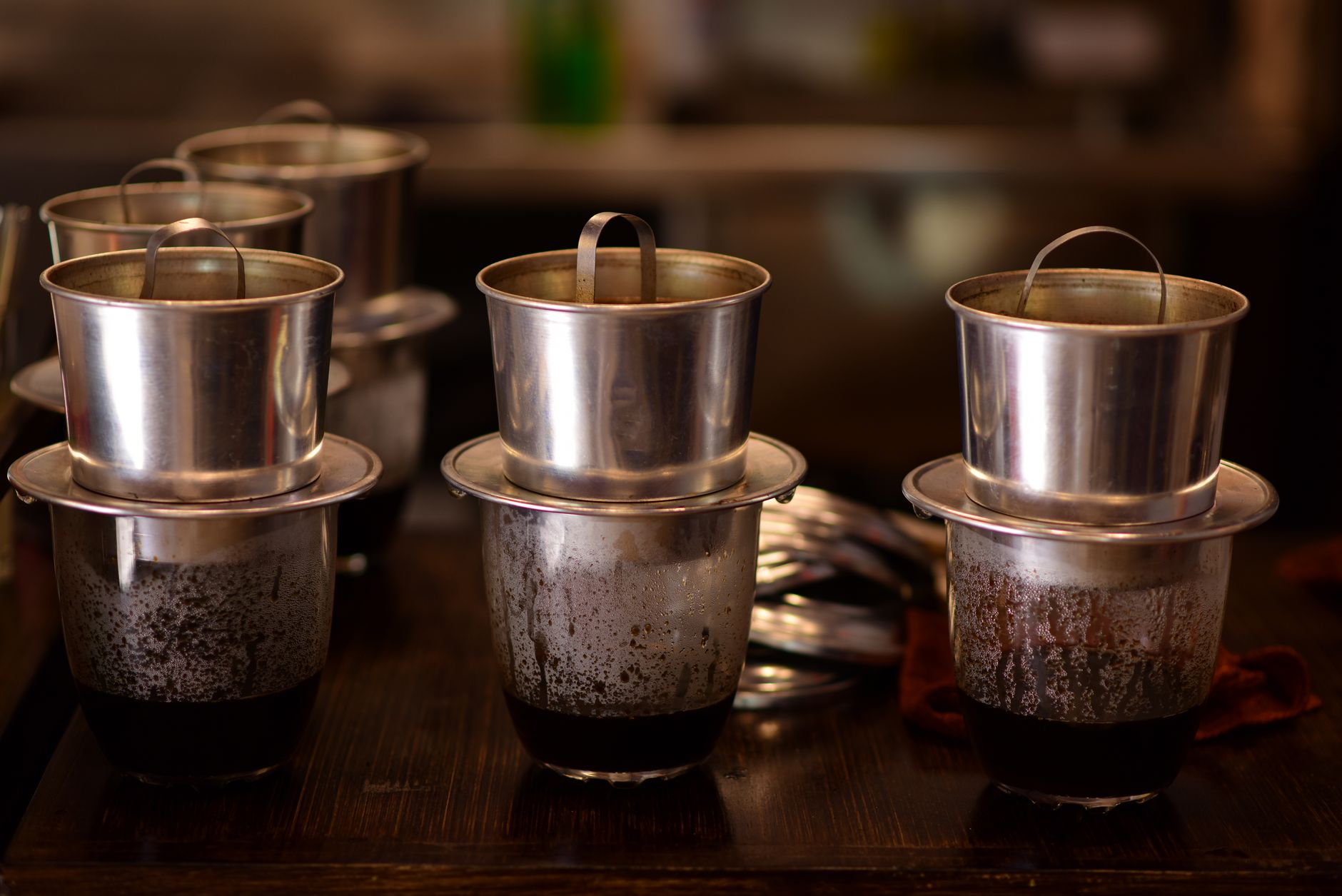
You'll need: fresh eggs, sweetened condensed milk, Vietnamese medium-roast coffee, a phin filter (a metal drip brewer), hot water, and a whisk or electric mixer. We cover Vietnamese coffee class basics so you understand the phin, but the egg coffee skill is the whisking and layering. At home, buy condensed milk and Vietnamese coffee online or from a local Asian market. Use a 1:3 or 1:4 ratio of egg yolk to condensed milk by volume (roughly 1 yolk + 3–4 tablespoons milk). Whisk for 3–5 minutes until pale and mousse-like. Brew 1 cup strong coffee over 4–5 minutes using the phin. Pour into a cup, then top with foam. The whole process takes 10–12 minutes once you've practiced. We send you home with written instructions. Many students say the tricky part is whisking by hand to the right texture—this is why we spend time on it in class.
Does an egg coffee class fit my Hanoi trip?
Egg coffee is a 2–3 hour experience, often done in the morning or early afternoon. We confirm details when you book. If your trip is 3–5 days, we recommend fitting it on Day 2 or 3, once you've seen a main landmark (a pagoda, temple, or the Old Quarter). Many travelers pair it with a walking tour of Hanoi's coffee culture before or after. If you're on a shorter trip, it still fits—we can align class times with your schedule. We confirm details when you book. For private and group class bookings, groups allow you to share the experience with fellow travelers, while private classes let you learn at your pace and ask deeper questions. Both are equally popular. We also offer more Hanoi experiences beyond egg coffee if you want to build a full itinerary.
What to check before you book:
- Egg freshness & source: We buy eggs daily. If you have concerns, ask on WhatsApp.
- Dietary fit: Raw egg, dairy, allergies—confirm with us before booking.
- Phin familiarity: No coffee experience needed. We teach filter basics.
- Hand-whisking ability: Physical effort is light; anyone can do it, but let us know if mobility is a concern.
- Schedule flexibility: We confirm details when you book. Last-minute bookings may have limits.
Pages from our team you may need

FAQ
Is raw egg safe in an egg coffee class?
We use fresh daily-sourced eggs. The drink is not fully pasteurized. If you're pregnant, immunocompromised, or allergic to eggs or dairy, egg coffee isn't safe. We'll be honest about this when you book.
Can I learn egg coffee if I've never used a phin filter before?
Yes. We teach phin basics as part of the class. No prior coffee experience needed. Many students arrive as first-time filter-coffee users.
How much does the class cost?
Ask us for a quote on WhatsApp. Pricing depends on group or private booking and date. We confirm details when you book.
Can I do an egg coffee class if I'm only in Hanoi for one day?
Possibly. We confirm details when you book. We try to accommodate short stays, but availability varies. Contact us as early as you can.
Will I actually be able to repeat this at home?
Yes, if you have access to fresh eggs, condensed milk, Vietnamese coffee, and a phin filter. We send written instructions. The hardest part is whisking by hand—this is why we practice it together in class.
What if my foam breaks or separates during the class?
This happens when eggs are cold or whisking stops too soon. We'll troubleshoot with you in real time. By the end of class, most students whisk at least one successful batch.
Does the class include food or other coffee drinks?
We confirm details when you book. Egg coffee is the core focus, but we can discuss what else is included when you book.
Book a class
Send your dates, how many people and anything we should know. We reply on WhatsApp in English with availability and a quote.
FAQ
Is raw egg safe in an egg coffee class?
We use fresh daily-sourced eggs. The drink is not fully pasteurized. If you're pregnant, immunocompromised, or allergic to eggs or dairy, egg coffee isn't safe. We'll be honest about this when you book.
Can I learn egg coffee if I've never used a phin filter before?
Yes. We teach phin basics as part of the class. No prior coffee experience needed. Many students arrive as first-time filter-coffee users.
How much does the class cost?
Ask us for a quote on WhatsApp. Pricing depends on group or private booking and date. We confirm details when you book.
Can I do an egg coffee class if I'm only in Hanoi for one day?
Possibly. We confirm details when you book. We try to accommodate short stays, but availability varies. Contact us as early as you can.
Will I actually be able to repeat this at home?
Yes, if you have access to fresh eggs, condensed milk, Vietnamese coffee, and a phin filter. We send written instructions. The hardest part is whisking by hand—this is why we practice it together in class.
What if my foam breaks or separates during the class?
This happens when eggs are cold or whisking stops too soon. We'll troubleshoot with you in real time. By the end of class, most students whisk at least one successful batch.
Does the class include food or other coffee drinks?
We confirm details when you book. Egg coffee is the core focus, but we can discuss what else is included when you book.
More like this

Egg coffee class in Hanoi
Egg Coffee Workshop in Hanoi: Choose Your Class Style
An egg coffee workshop teaches you to whisk and layer Vietnamese egg coffee (cà phê trứng) using a traditional phin filter, plus how to brew iced and hot styles. Workshops run in Hanoi only; we confirm dates and group sizes when you book on WhatsApp.
Egg coffee class in Hanoi
Best Egg Coffee Workshop in Hanoi: Our Class vs. DIY
Egg coffee (cà phê trứng) is Hanoi's signature drink, but technique matters. We run the only dedicated hands-on class at 11 Lien Tri, Hoan Kiem—here's how we compare to learning alone, and what to check before booking.

Egg coffee class in Hanoi
Egg Coffee Workshop Hanoi: Choose the Right Class for You
An egg coffee workshop in Hanoi teaches you to whisk and brew cà phê trứng—the creamy, sweet coffee that defined Old Quarter mornings for decades. We run classes at 11 Lien Tri, Hoan Kiem, where you'll master the phin filter and take home the technique.