
Home › Blog › Egg coffee class in Hanoi
Egg Coffee Recipe: Make Vietnamese Cà Phê Trứng at Home
By the Egg Coffee Class Hanoi team · 2026-11-18
Egg coffee is a traditional Hanoi beverage where egg yolk, condensed milk, and sometimes sugar are whisked into a thick, mousse-like layer and served atop dark Vietnamese coffee brewed with a phin filter. The recipe takes 5–10 minutes: brew strong coffee, whisk raw egg yolk with sweetened condensed milk until pale and fluffy, pour hot or iced coffee into a cup, then top with the foam. The technique originated in 1950s Hanoi when fresh milk was scarce; egg and condensed milk created a creamy substitute. At our Egg Coffee Class Hanoi by Cáo Experiences, we teach the whisking angle, timing, and how to adjust sweetness and texture for home brewing. The key mistakes: over-whisking (foam breaks), under-whisking (stays runny), or using cold coffee (foam collapses). It suits anyone who enjoys rich, dessert-like coffee and can safely eat raw eggs. Ask about dates on WhatsApp
✦ Planning this in Vietnam? Book on WhatsApp or see our Egg coffee class in Hanoi packages — reply within minutes.
What exactly goes into egg coffee?
Egg coffee contains four core ingredients: one raw egg yolk, two tablespoons sweetened condensed milk, one teaspoon sugar (optional), and one cup strong Vietnamese coffee. Some recipes add a pinch of salt or cocoa powder. Use the freshest eggs you can source—the fresher the yolk, the safer and silkier the foam. Condensed milk provides sweetness and fat for emulsion; it cannot be replaced with regular milk because regular milk lacks the binding proteins and sugar to hold the foam stable. We always confirm ingredient sourcing when you book a class so you know exactly what to expect.
How do you whisk the egg yolk correctly?
Whisking is the technical heart of egg coffee: place one raw yolk in a clean bowl, add two tablespoons condensed milk, then whisk vigorously with a fork or small whisk for 3–5 minutes until the mixture turns pale cream-colored and thickens to soft-peak consistency (it should ribbon slowly when lifted). The foam should feel airy, not grainy.
Common mistakes:
- Whisking too fast with a metal whisk (incorporates too much air; foam splits when poured)
- Stopping too early (mixture stays runny, sinks into coffee)
- Whisking cold ingredients (emulsion breaks; heat from coffee destabilizes it)
- Adding coffee directly to the yolk bowl (heat shock cooks the egg unevenly)
The correct rhythm is steady, circular whisking—not violent beating. Your wrist should move as though you're making a figure-8 in slow motion. Timing matters: at 2 minutes you'll see foam forming; at 3–4 minutes it reaches ideal thickness; by 5 minutes it may start to separate. When you attend our Vietnamese coffee class, you'll practice this under guidance so you feel the texture transition in real time.
Hot versus iced egg coffee: which should you make?
Both versions work, but they differ in texture and timing. Hot egg coffee is traditional: brew hot phin coffee (about 50 ml concentrated), pour into a cup, then immediately top with the whisked foam—the heat keeps the foam fluffy for 10–15 minutes. Iced egg coffee requires chilling the whisked foam first: prepare it, refrigerate for 2–3 minutes, then pour cold brewed coffee (or hot coffee over ice) into a glass, then spoon the chilled foam on top.
| Factor | Hot | Iced |
|---|---|---|
| Brewing time | 3–5 min phin brew | Same (can prep ahead) |
| Foam longevity | 10–15 min warm | 20–30 min chilled |
| Best season | Oct–Mar (Hanoi) | Apr–Sep (Hanoi) |
| Foam texture | Silky, airy | Denser, mousse-like |
| Difficulty | Easier (heat helps) | Requires fridge time |
Hanoi coffee culture uses hot egg coffee in cool months; locals switch to iced in summer. We confirm which style suits your climate when you book so we tailor the technique during your class visit.
Can you make egg coffee with pasteurized or cooked egg?
Yes—if you're concerned about raw egg safety. Pasteurized egg yolk (sold liquid in some regions, or as powder reconstituted with water) works fine, though the foam may be slightly less silky because pasteurization alters protein structure slightly. Some travelers ask us about using just egg white instead of yolk; we don't recommend it—white foams but lacks the richness and emulsifying fat that makes egg coffee distinct.
Dietary concerns we address:
- Vegan: substitute aquafaba (chickpea liquid) whisked with coconut cream—it won't taste identical but mimics the texture
- Dairy-free: use the aquafaba method; avoid regular condensed milk
- Raw egg worries: use pasteurized yolk or skip eggs entirely and try our private and group class where we also teach egg-free Vietnamese coffee styles
We always ask about allergies and dietary restrictions when you book so we can prepare the right variation during your class.
What's the full step-by-step process from start to finish?
Follow this checklist to master egg coffee at home:
- Prep (2 min): Source fresh eggs from a reliable vendor; chill a coffee cup if making iced version.
- Whisk foam (5 min): Separate one egg yolk into a clean bowl; add two tablespoons condensed milk; whisk 3–5 minutes until pale and fluffy; test by lifting the whisk—foam should ribbon back slowly.
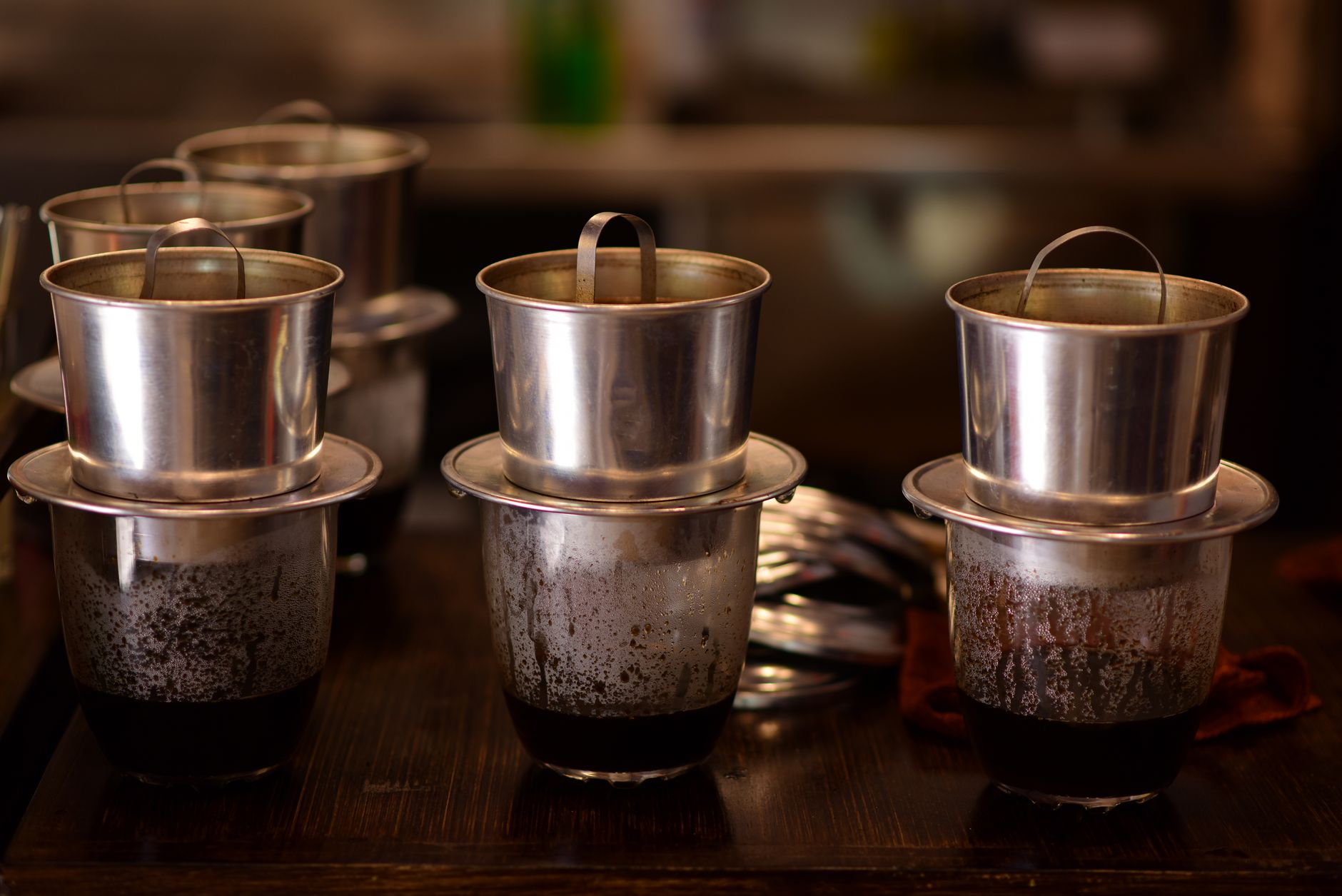
- Brew coffee (3–5 min): Fill a phin filter with medium-dark Vietnamese coffee (about 15 g); pour a small amount of hot water (200 ml at 85–90°C) to bloom for 30 seconds; then pour the rest slowly over 3 minutes until the phin drips into your cup below.
- Combine (1 min): Pour hot brewed coffee into a serving cup; immediately spoon the whisked foam on top (for hot version) or let foam chill 2–3 minutes then add to iced coffee.
- Serve: Stir to blend or leave foam on top for a layered look—both are correct.
Common failures and fixes:
- Foam deflates when you pour coffee: coffee was too hot (use 85°C, not boiling) or you whisked too fast (slow, steady rhythm works better)
- Foam tastes grainy: egg was not fresh enough; buy from a market that moves stock quickly
- Mixture stays runny: you stopped whisking too early; whisk until the volume nearly doubles
- Yolk cooks on the surface: coffee splashed directly onto yolk; pour coffee into the cup first, then top with foam
We teach all these troubleshoots during the class so you see the right signs in real time.

How do you replicate it at home without a phin filter?
A phin filter is traditional but not mandatory. If you don't own one, we recommend these alternatives:
- Moka pot or stovetop espresso maker: brews strong concentrated coffee similar to phin output; use the same amount of grounds (15 g) for 50 ml concentrate
- Pour-over cone with paper filter: takes slightly longer (4–6 min) but achieves comparable strength if you use coarse Vietnamese coffee grounds
- French press: fill with 20 g grounds, pour 200 ml hot water, steep 4 minutes, plunge gently; slightly more sediment than phin but flavor is close
- Instant Vietnamese coffee: dissolves instantly with hot water; not authentic but works in a pinch; use 2 teaspoons dissolved in 50 ml hot water
The key is strength: egg coffee requires about 50 ml of concentrated, dark-roasted coffee to balance the sweet, rich foam. Weak coffee tastes watered down underneath the topping. When you visit our egg coffee class, we teach you the phin technique because that's what Hanoi uses, and we also show how to adjust technique if you're using a different brewer at home afterward.
Why does egg coffee taste different when you make it at home?
Three main reasons: water quality (Hanoi tap water is mineral-rich; use filtered water if yours is very soft or very hard); coffee origin (we use Vietnamese medium-dark roasts with low acidity; American roasts may taste too sour underneath); egg freshness (Hanoi markets receive eggs daily; older eggs foam poorly and taste sulfurous).
A secondary factor is technique timing: at home you have fewer variables to control than in a class setting, so the first time often tastes slightly flatter. We guide you on sourcing the right coffee and eggs when you book, and we provide written reminders so you replicate our class environment as closely as possible. The good news is that egg coffee is forgiving—even imperfect foam tastes delicious.
Fits a Hanoi itinerary how?
Egg coffee fits a Hanoi trip in two ways: as a quick morning ritual (buy it from a street vendor in the Old Quarter between sunrise and 9 AM, the busiest service window) or as a hands-on class (2–3 hours typically, can be booked for mornings or afternoons to match your schedule—we confirm details when you book). Many travelers take the class early in a Hanoi visit so they can then order and appreciate it like a local for the rest of their stay. We help you decide which fits your pace when you contact us.
What to check before you buy (or book)
- Egg quality: Ask your vendor when eggs arrived; avoid any older than 1 week.
- Condensed milk brand: Check the label says "sweetened condensed milk" (not evaporated milk, which is unsweetened and watery).
- Coffee origin: Buy Vietnamese coffee labeled "Robusta" or "medium roast" (Arabica is too acidic; light roasts too sour).
- Water temperature: If brewing at home, use a thermometer; 85–90°C is ideal (boiling damages foam).
- Timing: Plan 15 minutes total; don't rush the whisking.

FAQ
Can you make egg coffee ahead of time and store it?
The foam keeps chilled for 2–3 hours in a sealed container, but tastes best fresh. The coffee base can be brewed ahead and reheated gently. We teach make-ahead tips during the class so you can batch-prepare for guests at home.
Does egg coffee contain raw egg, and is that safe?
Yes, it's raw egg yolk; that's the traditional method. It's safe if your eggs are fresh and sourced from a reputable vendor. Some countries and immunocompromised people avoid raw eggs; use pasteurized yolk instead, or try our egg-free Vietnamese coffee styles taught in the same class.
What type of Vietnamese coffee works best—Robusta or Arabica?
Robusta is traditional in Hanoi and pairs better with sweetness because it's naturally bitter and bold. Arabica works but tastes thinner under the rich foam. We use certified Vietnamese medium-dark roast Robusta in the class and recommend you source the same for home brewing.
How much egg coffee should you drink in one sitting?
One serving is typically 150–180 ml (coffee plus foam), meant as a dessert-like beverage, not a large cup. The fat and sugar content is high, so most locals enjoy it as a breakfast or afternoon treat, not a daily large volume.
Can you make egg coffee for a crowd at home without a phin filter?
Yes—use a Moka pot or pour-over to batch-brew 200–300 ml strong coffee, whisk multiple egg-yolk batches (one per 50 ml coffee), then assemble glasses as guests arrive. We teach batch techniques during group bookings so you're confident scaling it up for dinner parties.
What's the difference between egg coffee and affogato (ice cream + espresso)?
Affogato is cold dessert-style; egg coffee is a beverage with emulsified foam that blends into the coffee as you drink. Egg coffee is savory-sweet, not sweet-frozen. They're completely different traditions—egg coffee is Hanoi-specific, affogato is Italian. --- Request a class
Book a class
Send your dates, how many people and anything we should know. We reply on WhatsApp in English with availability and a quote.
FAQ
Can you make egg coffee ahead of time and store it?
The foam keeps chilled for 2–3 hours in a sealed container, but tastes best fresh. The coffee base can be brewed ahead and reheated gently. We teach make-ahead tips during the class so you can batch-prepare for guests at home.
Does egg coffee contain raw egg, and is that safe?
Yes, it's raw egg yolk; that's the traditional method. It's safe if your eggs are fresh and sourced from a reputable vendor. Some countries and immunocompromised people avoid raw eggs; use pasteurized yolk instead, or try our egg-free Vietnamese coffee styles taught in the same class.
What type of Vietnamese coffee works best—Robusta or Arabica?
Robusta is traditional in Hanoi and pairs better with sweetness because it's naturally bitter and bold. Arabica works but tastes thinner under the rich foam. We use certified Vietnamese medium-dark roast Robusta in the class and recommend you source the same for home brewing.
How much egg coffee should you drink in one sitting?
One serving is typically 150–180 ml (coffee plus foam), meant as a dessert-like beverage, not a large cup. The fat and sugar content is high, so most locals enjoy it as a breakfast or afternoon treat, not a daily large volume.
Can you make egg coffee for a crowd at home without a phin filter?
Yes—use a Moka pot or pour-over to batch-brew 200–300 ml strong coffee, whisk multiple egg-yolk batches (one per 50 ml coffee), then assemble glasses as guests arrive. We teach batch techniques during group bookings so you're confident scaling it up for dinner parties.
What's the difference between egg coffee and affogato (ice cream + espresso)?
Affogato is cold dessert-style; egg coffee is a beverage with emulsified foam that blends into the coffee as you drink. Egg coffee is savory-sweet, not sweet-frozen. They're completely different traditions—egg coffee is Hanoi-specific, affogato is Italian. --- ✨ Request a class
More like this

Egg coffee class in Hanoi
Egg Coffee Workshop in Hanoi: Choose Your Class Style
An egg coffee workshop teaches you to whisk and layer Vietnamese egg coffee (cà phê trứng) using a traditional phin filter, plus how to brew iced and hot styles. Workshops run in Hanoi only; we confirm dates and group sizes when you book on WhatsApp.

Egg coffee class in Hanoi
Best Egg Coffee Workshop in Hanoi: Our Class vs. DIY
Egg coffee (cà phê trứng) is Hanoi's signature drink, but technique matters. We run the only dedicated hands-on class at 11 Lien Tri, Hoan Kiem—here's how we compare to learning alone, and what to check before booking.

Egg coffee class in Hanoi
Egg Coffee Workshop Hanoi: Choose the Right Class for You
An egg coffee workshop in Hanoi teaches you to whisk and brew cà phê trứng—the creamy, sweet coffee that defined Old Quarter mornings for decades. We run classes at 11 Lien Tri, Hoan Kiem, where you'll master the phin filter and take home the technique.